


Life aboard a merchant ship exhibits peculiar sociological connotations. The ship is the seafarer's workplace, but it is also the place to rest, enjoy free time and relate to other individuals. The human group that is known as crew is, nevertheless, structured as a hierarchical and departmental system, in which the professional role accompanies each individual around the clock. This will give place to a series of small sub-groups, which will in turn divide further if their components come from different countries. All this happens within an environment that is in constant motion, isolated from society, afar from family and home. The seafarer develops thus a conduct and behaviour that makes him feel different from others, which may later on hinder his fitting back into the onshore society. Studying this sociological reality becomes essential for those who are in charge of designing the crew, and for those, such as Captains and officers, who have to organise their life and work on board. The present work analyses the sociological reality of the crew aboard a merchant ship from a total institution perspective. It examines the set of relationships that are established amongst the crew, as well as their connection to the outer world. It further proposes possible crew selection and organisation criteria. The Merchant Ship. A Sociological Analysis deals with a highly significant subject in the development of nautical activities, and is addressed to seafarers, students, shipping companies and other individuals and entities related to the merchant marine. It may also be of interest to those studying Social Sciences.
Barcelona: Universitat Politècnica de Catalunya. Iniciativa Digital Politècnica, 2009 · Politext, 189
236 p. · 18 x 24 cm · · ISBN 978-84-9880-366-2 · 21 € · anglès
Matèria: Tecnologia, enginyeria, agricultura, processos industrials : Tecnologia, enginyeria i activitats de construcció naval

Life aboard a merchant ship exhibits peculiar sociological connotations. The ship is the seafarer's workplace, but it is also the place to rest, enjoy free time and relate to ...
(Universitat Politècnica de Catalunya. Iniciativa Digital Politècnica, 2010) · 9 €

Els objectius que es persegueixen en introduir l'estudiant d'enginyeria aplicada a les indústries alimentàries en les assignatures més vinculades amb la tecnologia del proc...
(Universitat Politècnica de Catalunya. Iniciativa Digital Politècnica, 2005) · 308 pàg. · 27 €
(Universitat Politècnica de Catalunya. Iniciativa Digital Politècnica, 2008) · 240 pàg. · 19 €

Este libro de texto está dirigido a los estudiantes de la asignatura Industrias Lácteas de las carreras universitarias en las que se imparte esta disciplina. Los cuatro prim...
(Universitat Politècnica de Catalunya. Iniciativa Digital Politècnica, 2004) · 230 pàg. · 22 €

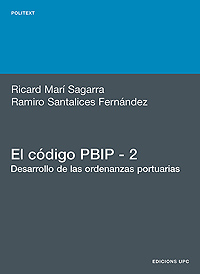
La Organización Marítima Internacional (OMI) ha impulsado el Convenio Internacional para la Seguridad de la Vida Humana en el Mar (Safety of Live at the Sea, SOLAS). Para la...
(Universitat Politècnica de Catalunya. Iniciativa Digital Politècnica, 2010) · 24 €
 Xarxa Vives d'Universitats
 e-buc@vives.org
 +34 964 72 89 93

Universitat Abat Oliba CEU • Universitat d'Alacant • Universitat d'Andorra • Universitat Autònoma de Barcelona • Universitat de Barcelona • Universitat CEU Cardenal Herrera • Universitat de Girona • Universitat de les Illes Balears • Universitat Internacional de Catalunya • Universitat Jaume I • Universitat de Lleida • Universitat Miguel Hernández d'Elx • Universitat Oberta de Catalunya • Universitat de Perpinyà Via Domitia • Universitat Politècnica de Catalunya • Universitat Politècnica de València • Universitat Pompeu Fabra • Universitat Ramon Llull • Universitat Rovira i Virgili • Universitat de Sàsser • Universitat de València • Universitat de Vic - Universitat Central de Catalunya